

How to Get More Clients for Your Digital Agency in 2026
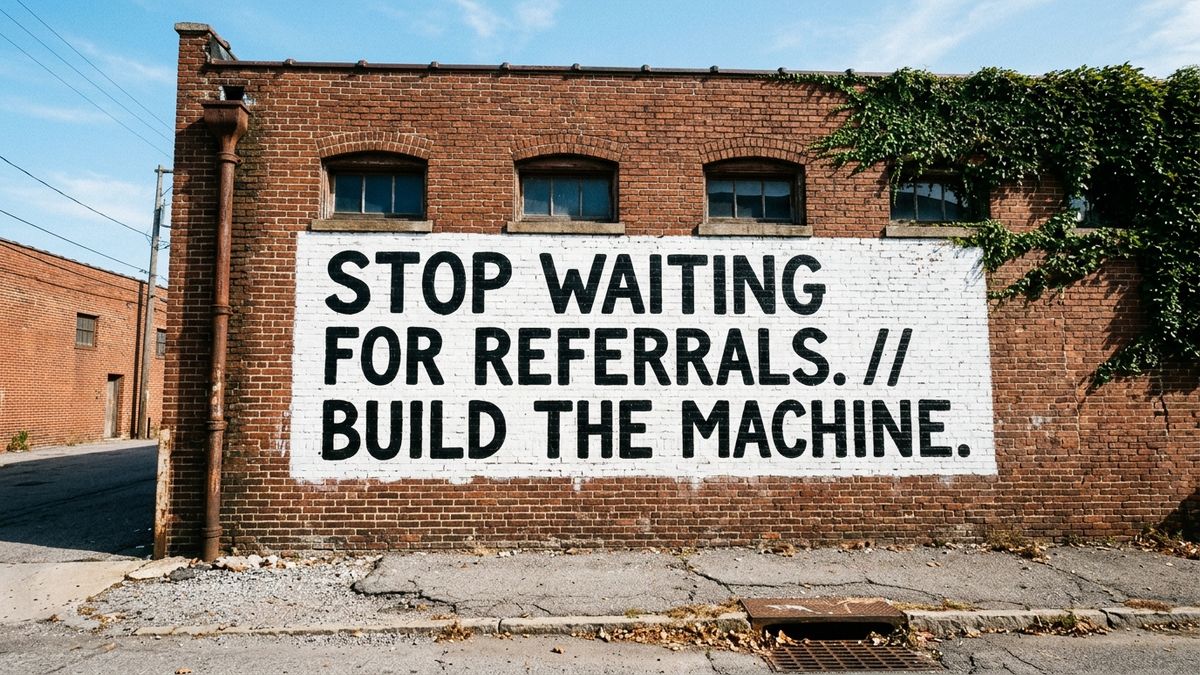
Over the past 18 years, I've watched hundreds of agency owners make the same mistake. They build something genuinely good, clients get real results, work is solid, referrals trickle in, and then they hit a wall. Not because they're not good enough. Because they never built a system to find new clients. They relied on momentum instead of a machine.
That's the lead gen problem most agency owners are sitting in right now. It's not that you're bad at what you do. It's not that your work isn't good enough. You just don't have a pipeline, and nobody taught you how to build one. The good news? It's completely fixable once you see what's actually going on.
This post covers 12 proven strategies for lead generation for a marketing agency, plus the mindset shift that makes all of them work. Skip the mindset piece and the tactics will fail. I've seen that happen enough times to say it with confidence.
Why Your Agency Has a Lead Generation Problem (and It's Not What You Think)
Your lead generation is broken because you're too busy doing client work to build a pipeline. Then a client churns. Panic sets in. You scramble, take on the wrong clients, get buried again, and the cycle repeats. Agency Mavericks calls this the activity trap: always active, never building.
Here's what I've seen separate the agencies that grow consistently from the ones that stay stuck. The ones that crack lead gen treat client acquisition as a system, not a task. They don't “do some marketing when things get quiet.” They have a machine running in the background every single week, regardless of how busy they are. That machine keeps running when a big client suddenly leaves. It keeps running when the team is at capacity. It's not dependent on their mood or their schedule.
Most of the lists you'll find on this topic give you nine things to try without telling you what to run first, what to skip, or how to connect the pieces. This post does. But before you dive in, take the Agency GPS Scorecard. It's free, takes five minutes, and tells you whether your lead gen problem is actually a positioning problem, a conversion problem, or something else entirely. That context will make everything below land harder.
The Root Cause: You Don't Have a Lead Generation Problem. You Have a Positioning Problem.
Before you touch a single tactic, answer this question honestly: can you describe your ideal client in one sentence? Who they are, what they do, the specific problem they have, and why you're the right person to fix it?
Most agency owners can't. That's the actual problem.
Vague positioning creates vague leads. When you try to market to “small businesses,” your content lands with no one. When you try to market to “e-commerce brands in the health and wellness space that have plateaued at $1–5M revenue and need a full-funnel SEO strategy,” your content lands with exactly the right people, and it repels everyone else. That's not a bug. That's the whole point.
The 12 strategies below only work if you're pointing them at the right target. Get your positioning sorted first. Everything else compounds from there.
12 Lead Generation Strategies That Actually Work for Digital Agencies
1. Build Your Trust Engine Instead of Chasing Virality
The most reliable lead generation system for an agency isn't ads or cold outreach. It's content that builds trust over time.
At Agency Mavericks, we call this the Trust Engine: a consistent content output strategy built around creating “memorable minutes” with your audience. Not viral hits. Not trend-chasing. Memorable moments that make potential clients think of you when they have a problem you solve.
Marcus Sheridan was on the WP Elevation podcast years ago, talking about how he ran a fibreglass swimming pool company called River Pools. In 2008, the global financial crisis hit and he lost 80% of his market overnight, $250,000 in loans and no pipeline. He started answering every question his customers ever asked, in writing, on his website. One single article on how much a fibreglass pool costs generated $2.5 million in sales. River Pools became the most trafficked pool website in the world. His agency had nothing. His content became the machine.
That's what a Trust Engine looks like when it's working. Here's what it looks like in practice for a digital agency:
- Pick one platform where your ideal clients already spend time (LinkedIn for B2B services, YouTube for education-heavy niches, Instagram for visual creative agencies)
- Commit to a publishing cadence you can sustain for 12 months, once a week beats five times a week for three weeks then nothing
- Create content that addresses the exact problems your ideal clients are typing into Google, not content about what you want to talk about
The goal is omnipresence in a niche, not reach across a category. You don't need to be everywhere, you need to be unavoidable in one place.
2. Niche Down Until It Feels Uncomfortable
This one never stops feeling risky. Do it anyway.
Generalist agencies compete on price. Niche agencies compete on expertise. When you're the only SEO agency for dental practices in Australia, you don't have competition. You have a category.
Here's how to find yours:
- Look at your last 20 clients. Which ones did you enjoy most? Which got the best results?
- Identify the industry, business size, and problem type that cluster in that group.
- Rebuild your positioning, website, and content around that cluster.
Yes, it'll feel like you're leaving money on the table. You're not. You're finally building a pipeline that doesn't require you to start from scratch every single month.
3. Get Your Referral System Out of Your Head and Into a Process
Most agencies get clients from referrals. Most agencies have zero system for generating them. They just hope satisfied clients mention them occasionally. That's not a strategy. That's hope with a bit of luck mixed in.
A proper referral system has three parts:
- Trigger: A specific moment in the client relationship where you ask, end of onboarding, after a meaningful win, at the six-month review
- Script: An exact ask. “Do you know one other business owner who's struggling with X? I'd love an introduction.”
- Incentive: Optional, but a genuine thank-you, a gift, a referral fee, or an exclusive resource, tells people you take their referral seriously
Document this. Put it in your CRM. Make it run automatically. A client who finished onboarding three weeks ago shouldn't be left to wander, they should be getting a check-in message and a warm referral prompt.
4. Use LinkedIn Like a Human, Not Like a Bot
LinkedIn is the single best platform for agency lead gen in 2026. It's where decision-makers are. It's under-saturated compared to Instagram and TikTok. And organic reach on personal profiles is still remarkably high.
The mistake most agency owners make is turning their LinkedIn into a broadcast channel, they post case studies at their audience and wonder why no one responds. Do this instead:
- Comment thoughtfully on posts from people in your ideal client niche (10 minutes a day, every day)
- Share one opinion, insight, or lesson from client work each week, not a pitch, an observation
- Send connection requests with a personal note that references something specific about their work
- Pin a post to your profile that clearly states who you help and what outcome you deliver
This compounds over six to twelve months. Most of your competitors will give up after four weeks. That gap is your advantage.
5. Stop Giving Away Free Strategy. Charge for Discovery.
This one is controversial. It's also one of the most powerful lead generation moves an agency can make.
When you charge a fee for a discovery or strategy session, typically $500 to $2,000 depending on scope, something shifts. The quality of your leads goes up dramatically. Tyre-kickers opt out. Serious prospects opt in. And you get paid to close.
Agency Mavericks has taught this model, the Paid Discovery Method, to thousands of agency owners over the years. The reframe is simple: you're a specialist. Specialists don't give away diagnoses for free. Doctors don't. Lawyers don't. Neither should you.
Paid discovery sessions also create natural urgency and commitment from the prospect. They've invested. They want to see it through.
6. Build a Lead Magnet That Solves a Real Problem
A lead magnet isn't a PDF you made in Canva called “10 Tips for Social Media.” Nobody downloads that anymore.
A useful lead magnet in 2026 does one of three things:
- Diagnoses a problem, a scorecard or audit tool, like the Agency GPS Scorecard
- Calculates a result, an ROI calculator, a pricing estimator
- Delivers a quick win, a template, a swipe file, a checklist that saves real time
The best agency lead magnets are diagnostic. They ask the right questions, surface a specific problem, and position you as the person who can fix it. If someone completes your scorecard and discovers their conversion funnel is the weakest part of their business, and you happen to fix conversion funnels, you've got a warm lead who already trusts your thinking.
7. Publish Case Studies That Prove Specific Outcomes
“We helped a client increase their traffic” is not a case study. It's a sentence, and a vague one at that.
A case study that generates leads tells a story: the situation before, the specific intervention, the measurable result, and what the client said about it. It names the industry, the problem, and the number.
“We helped a Brisbane-based physiotherapy clinic increase their Google Ads conversion rate from 2.3% to 8.1% in 90 days, reducing their cost per new patient booking from $127 to $37.”
That case study attracts every physio clinic owner currently burning money on Google Ads. It repels everyone else. Publish one per quarter. Make them specific. Gate them behind a form if you want leads from them, or publish them free if you want Google to index them and let the traffic do the work.
8. Partner With Complementary Service Providers
Your ideal clients already have accountants, bookkeepers, web developers, business coaches, and copywriters. Those people talk to your prospects every single week. One strategic partnership with an accountant who serves your niche can generate more leads in a quarter than six months of cold outreach.
Here's how to build those partnerships:
- Identify three to five service providers who serve your ideal client but don't compete with you
- Offer to send referrals to them first, give before you ask
- Once the relationship is warm, propose a formal referral arrangement
- Show up to their events, share their content, introduce them to your network
The goal is to become the obvious referral for anyone in your niche who needs what you do. Strategic partners are a shortcut to that outcome, and they cost you nothing but a bit of genuine relationship-building.
9. Run a Simple Email Newsletter to Your Existing Contacts
You already have a list. Former clients, warm prospects, people who downloaded something, contacts from your network. Most agencies ignore this list entirely after the initial contact. That's leaving significant potential revenue sitting idle.
An email newsletter doesn't need to be elaborate. A weekly or fortnightly email that shares one insight, one client win, and one resource. Send it consistently for twelve months. It keeps you front of mind in a way no social media algorithm can replicate.
One rule: always include one soft call to action in every email. “If you know anyone who's struggling with X, send them our way.” Referrals from a warm email list are some of the highest-quality leads you'll find, because the person forwarding your email is putting their reputation behind you.
10. Speak at Events and Podcasts Your Clients Actually Attend
Speaking on stage or as a podcast guest isn't about vanity. It's a trust accelerator.
Someone who's heard you speak for 45 minutes knows more about your thinking and approach than someone who's read every page of your website. That relationship converts at a completely different rate. Here's how to make it work:
- Target industry events and podcasts where your ideal clients are the audience, not marketing industry events where everyone in the room is a competitor
- Pitch yourself as a guest with a specific, problem-focused topic. Not “how to do SEO” but “why most e-commerce brands are wasting 40% of their Google Ads budget on the wrong keywords”
- Always offer a free resource at the end, your lead magnet or scorecard, to capture contact details
Two or three speaking slots a year can fill a pipeline on their own if you're targeting the right rooms. The key word there is “right”, most agency owners speak at marketing events full of other agency owners. That's networking, not lead generation.
11. Run a Small Budget Paid Campaign to Your Best Lead Magnet
Organic lead generation is slow. That's not a criticism, it's the cost of building something durable. But if you need leads now, a targeted paid campaign can accelerate the flywheel.
The play here is not a brand awareness campaign. It's a direct response campaign driving traffic to your best-performing lead magnet, the one people actually complete and share. A budget of $500 to $1,000 per month on Meta or Google, targeting your niche specifically, will generate enough data within 60 days to know whether the funnel works. If your lead magnet converts at 20% or higher, paid traffic is worth scaling. If it's converting at 3%, fix the lead magnet before spending more money pushing traffic into a broken funnel.
Do not run paid traffic to a generic homepage. Nobody converts from a homepage.
12. Create a Simple Outbound System for Warm Targets
Cold outreach has a terrible reputation because most agencies do it badly. Mass emails. Generic pitches. No personalisation. No reason to reply. Here's what works instead.
A warm outbound system works like this:
- Build a target list of 20 to 30 companies per month. Focus on organisations that match your niche, show signals of growth (hiring, funding, new product launches), and have a problem you can specifically identify
- Engage with their content on LinkedIn for two to three weeks before reaching out
- Send a short, specific message that references their business. Not a pitch, an observation. “I noticed your Google Ads are running to a page that doesn't have a phone number above the fold. That's probably costing you conversions. Happy to show you what we'd fix first.”
- Follow up twice, then stop. No spray and pray.
This approach takes more time per lead, but it generates a conversion rate that makes the effort worth it. Ten replies from 30 warm outreach attempts beats zero replies from 500 cold blasts every time.
Where to Start This Week
You now have 12 strategies. Don't try to run all twelve at once, that's the fastest way to run all of them badly.
Here's how to prioritise: take the Agency GPS Scorecard first. It will tell you whether your biggest problem is awareness, leads, conversion, or retention. Then come back to this list and start with the two or three strategies that directly address your specific gap.
If you're starting from scratch with no pipeline, focus on strategies 1, 3, and 6 first, Trust Engine content, a working referral system, and a lead magnet that converts. Those three alone can generate consistent leads within 90 days. Do them consistently. Most of your competitors won't.
Frequently Asked Questions About Lead Generation for Marketing Agencies
How long does lead generation take to produce results for a marketing agency?
Most agency lead generation strategies take 60 to 90 days to produce consistent results. Referral systems can work faster, sometimes within weeks. Organic content and SEO take longer, typically three to six months. Plan for a 90-day runway before judging any strategy.
What is the best lead generation strategy for a new digital agency with no existing clients?
For a brand-new agency, warm outbound and strategic partnerships deliver the fastest results. Build a list of 20 ideal prospects, engage with them on LinkedIn for two weeks, then send a specific, problem-focused message. Simultaneously, approach one or two complementary service providers about referral arrangements. Both cost time, not money.
How do I generate leads for my marketing agency without a big budget?
The highest-ROI lead generation for a marketing agency with a small budget is referrals and content. Ask every past and current client for one introduction. Publish one piece of useful content per week on the platform your ideal clients use. Both compound over months and cost nothing but consistency.
What's the difference between marketing agency lead gen and lead generation as a service?
Lead generation for a marketing agency means generating new clients for your own agency. Lead generation as a service means running lead generation campaigns for your clients. This post is about the first one. The skills overlap, but the audience, message, and channels are completely different.
How many leads does a digital agency need per month to grow consistently?
It depends on your average project value and close rate. If you close one in three qualified conversations and your average project is worth $5,000, you need six qualified leads a month to land two new clients. Work backwards from your revenue goal to set a realistic lead volume target, then work backwards again to figure out which two strategies from this list will get you there.
Stop Waiting for Referrals. Build the System.
The agency owners who grow year after year aren't luckier than you. They built a system for lead generation and ran it consistently, when they were busy, when it felt uncomfortable, when the pipeline looked healthy.
I've spent 18 years watching agency owners get this wrong before they get it right. The ones who crack it stop treating lead generation as something they do when they have time, and start treating it as the engine that makes everything else possible.
Start with your positioning. Pick two strategies from this list. Run them for 90 days without stopping.
And if you want a clear picture of where your agency stands before you start, take the Agency GPS Scorecard now. It's free, it takes five minutes, and it'll tell you exactly where to focus first.
Ready to go further? The Mavericks Club is where agency owners build the systems, skills, and support network to grow without the chaos. Let's get to work.