

Here's a number that should piss you off: 33% of marketers say measuring ROI is their number one challenge in 2026. That's one in three people who are spending money on content and campaigns, and they genuinely have no idea if it's working.
I was one of those people. I was running Meta ads and Facebook was telling me I was getting scheduled appointments at $200 each. Sounded great, right? Then I went and checked the actual first-party data: the real numbers from our CRM. Turns out each qualified appointment was costing us $700. Facebook was lying. Well, not lying exactly. They were over-reporting ROAS because it suited them to make their platform look good.
If you're running a digital agency, this isn't just your problem. It's your clients' problem too. And if you can't solve it for yourself, you sure as hell can't solve it for them.
In this post, I'm going to walk you through the exact system I use to track content ROI using first-party data. I'll show you how to know, with names, emails, and dollar amounts, which piece of content actually drove a sale. No guessing. No vanity metrics. Just revenue truth.
The Dirty Secret: Platform Attribution Is Broken
Let's get something straight. When Facebook, Google, or LinkedIn tells you how many leads or conversions your ad generated, they're giving you their version of reality. And their version is always generous to themselves.
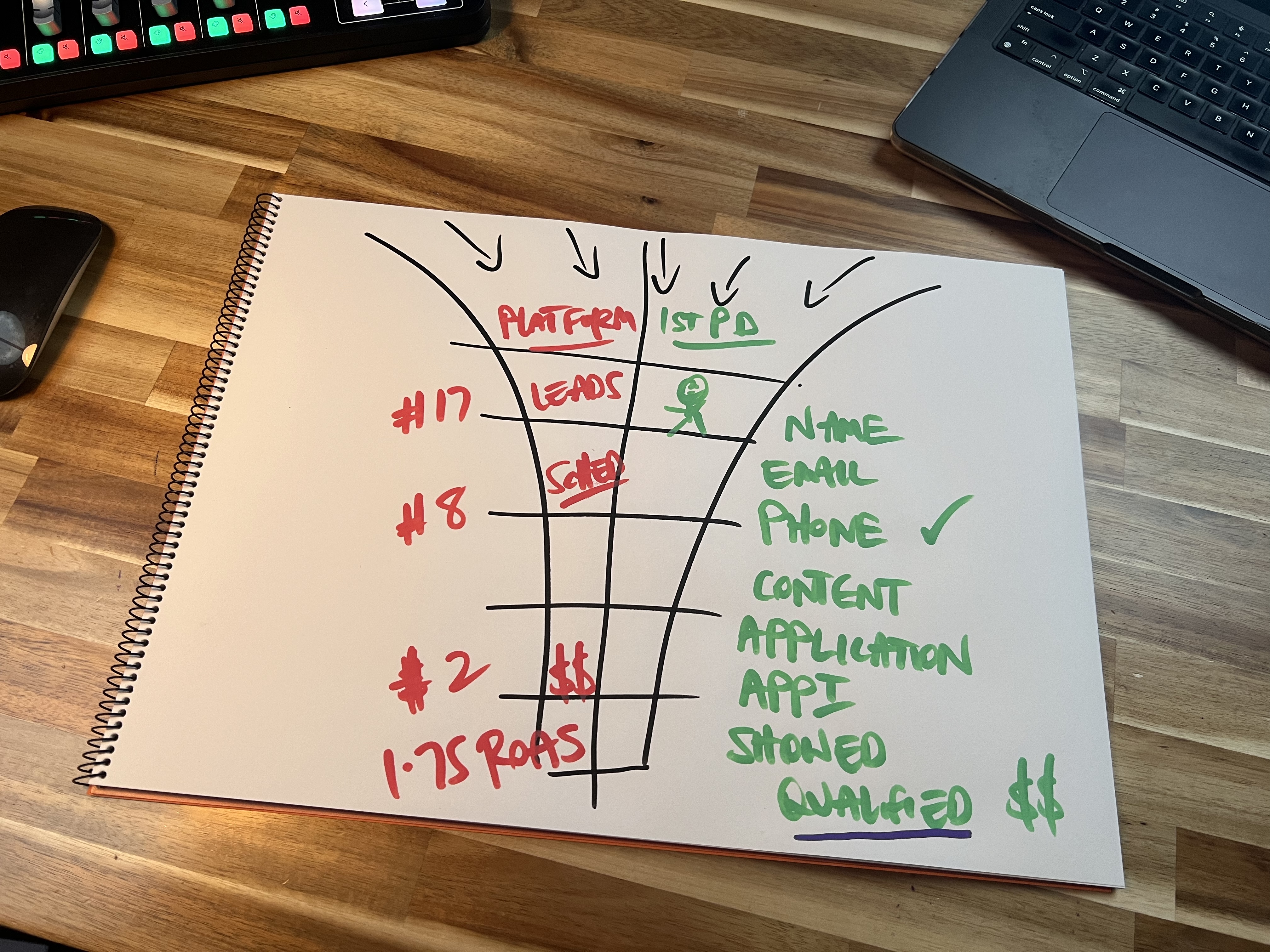
This is what I call the left side of the funnel. It's the platform's dashboard showing you impressions, clicks, leads, scheduled appointments, purchases, and ROAS. These are just numbers. They don't have names. They don't have verified phone numbers. They're estimates at best and outright fiction at worst.
The right side of the funnel is where reality lives. That's your first-party data: a verified name, email address, confirmed phone number, the actual content they responded to, and their journey through specific events in your pipeline.
When I discovered that gap ($200 per appointment according to Facebook versus $700 in actual cost per qualified appointment), I realised the entire system was broken. And most agency owners are making decisions based on the broken side.
Platform Numbers vs. First-Party Data: Why It Matters for Content Attribution Tracking
Here's the difference in plain English.
Platform Attribution (Left Side)
- Impressions, clicks, leads
- Scheduled appointments, purchases
- ROAS figures
- Problem: These are just numbers without names. The platform takes credit for anything it touched, even tangentially.
First-Party Data Attribution (Right Side)
- Verified name, email, and phone number
- The specific content or ad they responded to
- Their full journey: applied, scheduled, showed up, qualified, became a client
- Advantage: You know exactly who did what, when, and because of which piece of content.
This is the foundation of first-party data marketing. You're not relying on a platform's self-reported numbers. You're matching real people to real activity using data you own and control.
And here's why this is especially critical right now: with cookie deprecation, iOS privacy updates, and tighter data regulations, platform attribution is only going to get less accurate. First-party data is the only reliable path forward.
What a Qualified Appointment Actually Looks Like
Before we get into the tracking system, you need to understand what we're actually tracking towards. Because if you're just counting leads, you're still playing in vanity metric land.
Here's the journey in our pipeline:
- Page View: Someone lands on a key page (e.g., our Digital Agency Coaching page).
- Application: They fill out an application form with their details.
- Schedule: They book a call with our team.
- Show Up: They actually turn up to the call. About 70% of people who schedule actually show up. The rest ghost. That's normal.
- Qualified: Our team assesses whether they're a fit based on revenue, team size, services they offer, coachability, and mindset.
After qualification, they move into one of four CRM pipeline stages:
- Offer Made: We've presented our coaching program
- Gone/Rejected: Not a fit, or they declined
- Follow-Up: Interested but needs more time
- Signed Contract: They're a client. Revenue in the bank.
We run this in GoHighLevel as our CRM, but you can do this in HubSpot, Salesforce, or just about any decent CRM. The tool doesn't matter as much as the structure.
The point is this: when I say I can track content ROI, I don't mean I can see how many clicks a blog post got. I mean I can tell you that John saw a LinkedIn post, applied for coaching, showed up to his call, qualified, and signed a $15,000 contract. That's real marketing attribution for agencies: not the pretend kind.
How to Track Content ROI: The Step-by-Step System
Right, let's get into the nuts and bolts. This is the system I use, and it's the same system we teach agency owners to implement for their own businesses and their clients.
Step 1: UTM Parameters on Everything
This is non-negotiable. Every single link you publish. organic social posts, website buttons, email links, paid ads. every single one: gets UTM parameters.
If you're not familiar, UTM parameters for marketing are tags you add to the end of a URL that tell your analytics tools where traffic came from, which campaign it belongs to, and what specific piece of content drove the click.
Here's what a tagged URL looks like:
Use a tool like utmbuilder.net to generate these consistently. The key parameters:
- utm_source: Where the traffic comes from (linkedin, facebook, email, google)
- utm_medium: The channel type (organic, paid, email, referral)
- utm_campaign: The campaign or initiative name
- utm_content: The specific piece of content (this is the money parameter for content ROI)
Pro tip: Create a naming convention and stick to it. If your team uses different formats, your data becomes a mess. Document it. Enforce it.
Step 2: Install a Tracking Pixel on Your Website
A tracking pixel sits on your website and tracks anonymous visitors. It captures their UTM data, pages viewed, time on site, and return visits all before they ever fill out a form.
This is crucial because it builds a profile of each visitor before you know who they are.
Step 3: Match Identity to Activity
Here's where the magic happens. When a visitor fills out a form and gives you their name, email, and verified phone number, the system matches that identity back to all their previous anonymous activity via IP address.
So now you know: “John has been in our pixel for 7 days. He originally came from a LinkedIn post about scaling agency operations. we know because that LinkedIn post had UTM parameters. He came back twice from Google, viewed the pricing page three times, and then applied.”
That's content attribution tracking at its finest. You can trace the entire journey from first touch to signed contract.
Step 4: Connect It to Your CRM Pipeline
The final piece: all of this data flows into your CRM. When John moves from “Applied” to “Scheduled” to “Showed Up” to “Signed Contract,” you have the full picture.
You don't just know that John became a client. You know which LinkedIn post started the relationship. You know which email nudged him to book. You know which page he was on when he decided to apply.
That's how you track content ROI. Not with impressions and click-through rates. With actual revenue tied to actual content.
Real Attribution Examples From My Dashboard
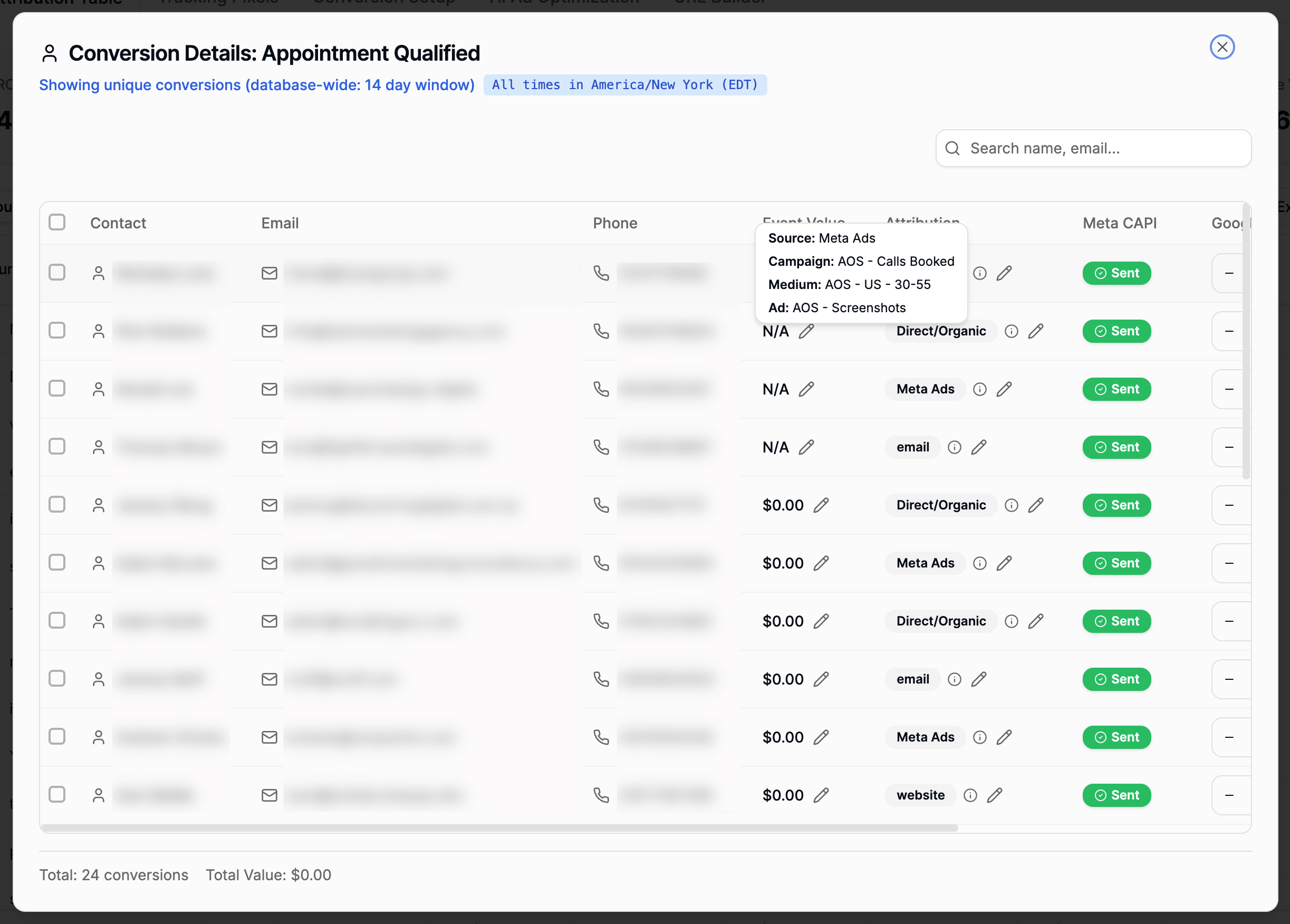
Let me give you three real examples from our attribution dashboard so you can see this in practice.
Example 1: Meta Ads. Screenshot Ads Win
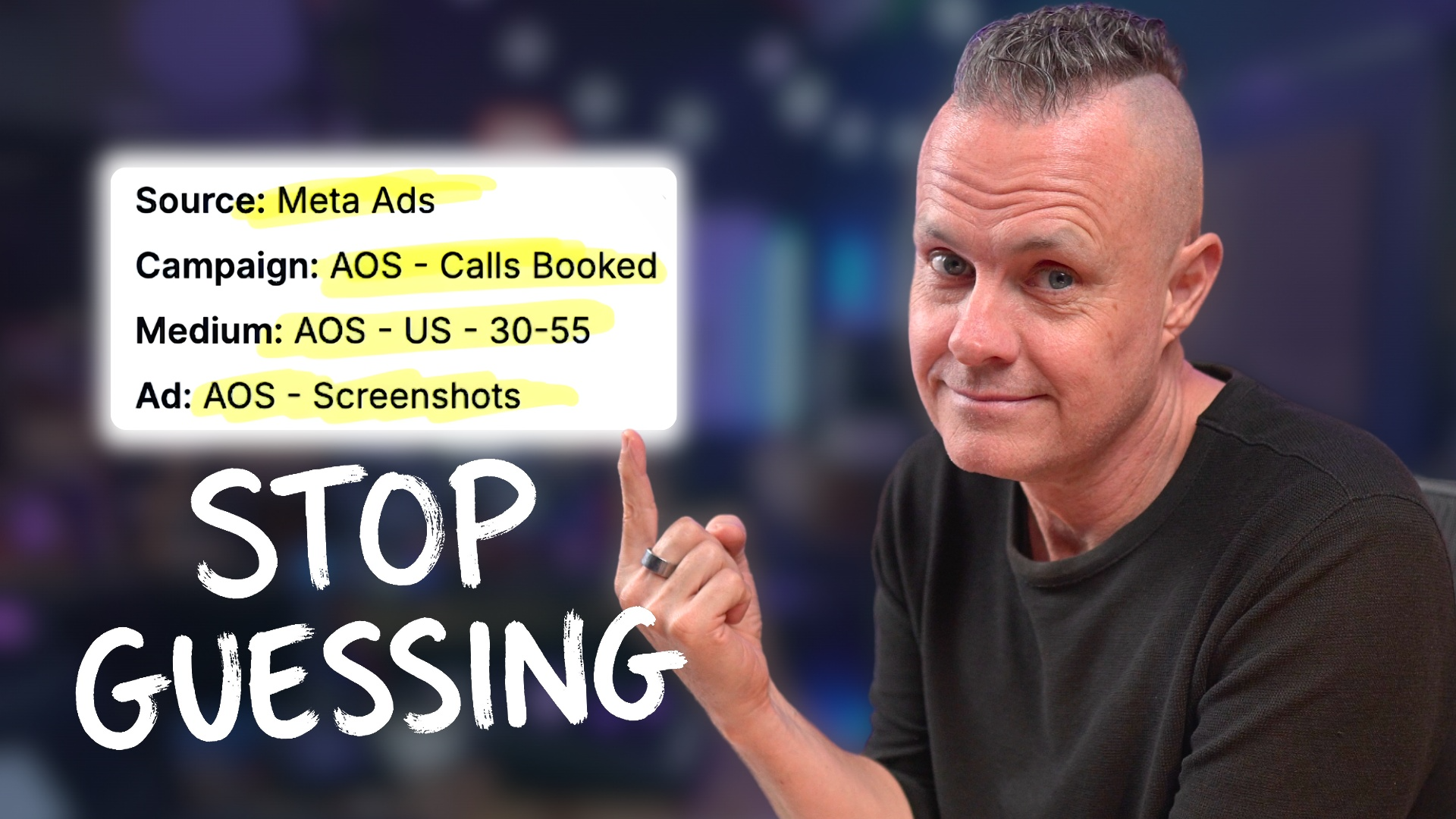
We ran a Meta campaign called “Agency Operating System Calls Booked” with an ad set targeting US audiences aged 30-55. One of the ads. called “Agency Operating System Screenshots”: drove a disproportionate number of qualified appointments.
The attribution data was clear: screenshot-style creative was outperforming everything else in that campaign. The action? Make more screenshot ads. Simple. But we'd never have known that without first-party attribution. Facebook's dashboard just showed a blended ROAS number. it didn't tell us which specific creative was driving the qualified leads.
Example 2: Email. The Subject Line That Converted
We send over 400,000 emails per month. Daily emails to our list. One qualified appointment was attributed to an email with the subject line: “The bottleneck in your agency isn't your team.” Sent on a Wednesday.
Think about that for a second. Out of hundreds of thousands of emails, we could pinpoint exactly which email moved one person from subscriber to qualified lead. The action? Send more emails on that topic agency bottlenecks, leadership constraints, the stuff that makes agency owners stop and think “shit, that's me.”
Example 3: Organic/AI Search. ChatGPT Driving Real Leads
This one blew my mind. A qualified appointment came from someone who found our Digital Agency Coaching page via a ChatGPT search. They landed on the page, clicked the “Request a Call” button, and entered the pipeline.
AI search engines are now driving real, qualified traffic. If your content isn't optimised for AI search (clear, structured, factual answers to specific questions), you're missing an emerging channel. The action here: optimise that coaching page further and make sure it's answering the questions AI engines are pulling from.
Why Every Agency Owner Needs This. For Yourself and Your Clients
Look, I know Gary Vee and Hormozi both say the same thing: make more content. And they're not wrong. Content is the engine. But if you don't know which content drives revenue, you're just burning time and money creating stuff that might work.
Content costs real resources. Every blog post, every video, every social carousel takes time to produce. If you're an agency owner charging clients for content creation, you need to demonstrate ROI. Not “engagement”. ROI. Revenue. New customers. Actual money.
Here's the thing most agencies get wrong: they implement some version of attribution tracking for their clients but don't do it for themselves. You need to eat your own cooking. If you can't track your own content ROI, why would a client trust you to track theirs?
When you have this system running, you can:
- Double down on what works: see exactly which content types, topics, and channels drive qualified leads, and do more of that
- Cut what doesn't: stop wasting resources on content that generates vanity metrics but zero revenue
- Prove value to clients: show them a direct line from your content to their new customers
- Charge more: agencies that can demonstrate measurable ROI command higher retainers. Full stop.
- Make the damn algorithm work for you: when you know which organic post started a $15K relationship, you can reverse-engineer your content strategy from revenue backwards
Getting Started: Your First-Party Data Marketing Checklist
If you're starting from zero, here's the quick-start checklist:
- Audit your links: Go through every active campaign, social profile, email template, and website button. If a link doesn't have UTM parameters, fix it today.
- Set up your naming convention: Document your UTM parameter standards (source, medium, campaign, content). Share it with your team. No exceptions.
- Install a tracking pixel: Get visitor-level tracking on your website so you can capture anonymous activity before form fills.
- Structure your CRM pipeline: Define clear stages: Applied → Scheduled → Showed Up → Qualified → Offer Made → Signed. If your CRM is a junk drawer, clean it up.
- Connect the dots: Make sure your form submissions capture UTM data and flow into your CRM. When someone fills out a form, you should be able to see their full journey.
- Review weekly: Pull your attribution report every week. Look at which content, campaigns, and channels drove qualified appointments. Adjust your content strategy accordingly.
This isn't a set-and-forget thing. It's a system that you run and refine continuously. But once it's running, you'll never go back to guessing.
Want Help Setting This Up?
If you're an agency owner and you want to implement this content attribution system for yourself. and start offering it as a service to your clients. we can help.
Inside our coaching program at Agency Mavericks, we help digital agency owners build systems exactly like this: repeatable, measurable, and designed to grow revenue. Not theory. Not another course. Actual implementation with people who've done it.
→Request a Call with Our Team and let's talk about what this could look like for your agency.